Thursday, October 2, 2014

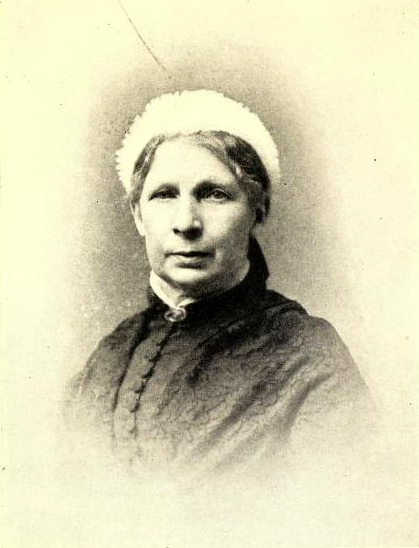
Sealts and Kier on Elizabeth Shaw Melville

Elizabeth Shaw Melville.jpg
Elizabeth Shaw Melville in 1885
via Wikimedia Commons
"...the desire of my heart has been to see my husband’s books resurrected, as it were, to call forth as they have begun to do, the recognition which their birthright might reasonably claim."  --Elizabeth Shaw Melville
In The Early Lives of Melville, Merton M. Sealts, Jr. highlighted contributions to Melville biography by Arthur Griffin Stedman, among others. Sealts acknowledged the crucial role of Melville's wife in republishing Typee, Omoo, White-Jacket, and Moby-Dick:
"The 1892 edition, published with Stedman's indispensable help, was her primary effort...." --Early Lives, page 78; and Pursuing Melville, page 215


And Sealts recognized additional "examples of Mrs. Melville's realization of every new opportunity to keep her husband's name and fame before a larger audience" such as her supplying "a previously unpublished portrait of Melville for use in the Century Magazine" and assisting her friend Harriette M. Plunkett with materials for Plunkett's article in the Springfield, Massachusetts Sunday Republican (July 1, 1900).

The chapter in Early Lives on "Family Reminiscences" transcribed Elizabeth Shaw Melville's notebook memoranda, but Sealts did not consider her independently of Stedman in the chapter on "Biographers of the Nineties."

With proper credit to Sealts and also the 1969 doctoral dissertation on Elizabeth Shaw Melville by Amy Elizabeth Puett, Kathleen E. Kier supplements and to some extent counterbalances the history of early biographies by focusing on the gracious agency of Melville's "sharp-witted" and "stoic" wife.
My focus here is on Elizabeth, and my purpose is to establish that she herself provided the principal impetus behind the crusade, though she was well aware that a professional man of letters would have to handle the particulars.
Lizzie’s correspondence reveals that even near the end of her life this sharp-witted lady’s first priority was re-establishing Melville’s stature in the literary world.  
--"Elizabeth Shaw Melville and the Stedmans, 1891-1894," Melville Society Extracts 45 (February 1981) page 3.
Here is the conclusion of Kier's article "Elizabeth Shaw Melville and the Stedmans, 1891-1894" in Melville Society Extracts 45 (February 1981) pages 3-8 at page 8:
When Arthur’s personal problems become overwhelming, Lizzie gently lets him off the hook, excusing his absence from her life: “I can understand—as perhaps few can so well, the absorption of a busy literary man.” This last statement, in light of current discussion of the problematic nature of the Melville marriage, says a great deal about the gentle, stoic Elizabeth and her relations with her husband. Whatever storms their fragile marriage had earlier encountered, they were over at the end and mattered little, if at all, to her. That a woman involved for over forty years in the intense and complicated business of writing and publishing books should choose to continue the struggle after her husband’s death, when she might have been grateful for respite, should silence those who have questioned her spirit or her wisdom relating to Melville’s works. --Kathleen E. Kier, Melville Society Extracts 45, page 8
Photo Credit: Maisons d'écrivains

Tuesday, September 30, 2014

The Banks of The Blue Moselle


What Harry Bolton sang for Wellingborough Redburn "under the lee of the long-boat" on Redburn's return voyage from Liverpool to New York:

BANKS OF THE BLUE MOSELLE.

When the glow-worm gilds the elfin bower,
That clings round the ruin'd shrine,
Where first we met, where first we lov'd,
And I confess'd me thine ;
'Tis there I fly to meet thee still,
At sound of vesper bell ;
In the starry light of the summer night,
On the banks of the blue Moselle.

If the cares of life should shade my brow,
Yes, yes, in our native bowers,
My lute and harp might best accord,
To tell of happier hours ;
'Tis there I'd soothe thy grief to rest,
Each sigh of sorrow quell :
In the starry light of the summer night,
On the banks of the blue Moselle.
As the sheet indicates, music is by composer George Herbert Rodwell, a.k.a. G. H. Rothwell. Lyrics are by Edward Fitzball.


Images: JScholarship

Sunday, September 28, 2014

Morgan's History of Algiers

Ex-Voto of a Naval Battle between a Turkish ship from Alger and a ship of the Order of Malta under Langon, 1719
PHGCOM, anonymous 1719 painting, Public domain, via Wikimedia Commons 
But I found ample entertainment in a few choice old authors, whom I stumbled upon in various parts of the ship, among the inferior officers. One was "Morgan's History of Algiers," a famous old quarto, abounding in picturesque narratives of corsairs, captives, dungeons, and sea-fights; and making mention of a cruel old Dey, who, toward the latter part of his life, was so filled with remorse for his cruelties and crimes that he could not stay in bed after four o'clock in the morning, but had to rise in great trepidation and walk off his bad feelings till breakfast time.  --White-Jacket, A Man-of-War Library
Howard Vincent thought Melville had both Morgan's History and another book, Knox's Captivity in Ceylon, "at hand" when writing White-Jacket:
Melville's third paragraph about a couple of "choice old authors, whom I stumbled upon in various parts of the ship" is clearly his improvisation, or use, of two books from which he, now author in 1849, was then reading: Morgan's History of Algiers, and Knox's Captivity in Ceylon. That these were at hand in Melville's New York study is suggested by his adequately accurate quotation from the second work.
--The Tailoring of Melville's White-Jacket, 118
Vincent says "improvisation" to distinguish this section of more original writing from other passages in the same chapter of White-Jacket that Melville adapted from Mercier's Life in a Man-of-War.  John or Joseph Morgan's Complete History of Algiers does look like a potentially useful source-book for remarkable North African scenery and military history, with tales of captivity and piracy on the Barbary coast. For a start, what about that restless, remorseful Dey? Wonder if we can find any trace of him trying to "walk off his bad feelings" in either volume of Morgan's History. If he's there somewhere, it might be fun to compare the original text with Melville's paraphrase. I am guessing "breakfast time" at least is Melville's contribution.

Volume 1 at the Hathi Trust Digital Library:


Here's a link to the second volume: Morgan's Complete History of Algiers, vol. 2 

Saturday, September 27, 2014

Old Whale Ship, New GoPro, Rookie in the Rigging


Melville scholar and Whitman College alumnus Robert K. Wallace, climbing the rigging of the whaleship Charles W. Morgan.

Wyn Kelley on Melville and Margins

As you might have guessed by now, we don't really get regular news here on the prairie.

For anybody else who missed the great Unbound symposium back in May 2012, MIT has video and podcasts of, among other exciting events, three different panels offering 

"Speculations on the Future of the Book."

The first panel of May 4, 2012 included Melville scholar Wyn Kelley who examined "the margin as a creative space for writers, critics, and artists" in her presentation (starting at 42:12), “Leaving an Open Margin: the Example of Herman Melville."


Saturday, September 20, 2014

Marginalia in Melville's lost Seneca (1620 second edition, not 1614?)


Looking for lost notes in a burned-up book? Leyda's grand old Log to the rescue, once again! VOLUME ONE gives the following marginalia in that lost volume of Seneca--the one Carl Haverlin used to have. In 1951 it was still in Haverlin's collection. And hold up, Leyda identifies this book as the second "Newly Inlarged and Corrected" edition of 1620. But as listed in the catalog at Melville's Marginalia Online, Sealts #457 is the 1614 first edition. Which is it? Or which was it? What fun it was to see the 1614 edition at Hathi Trust Digital Library, but maybe that's the wrong one. No luck yet turning up the1620 edition. Bauman Rare Books had the second edition for sale, but unfortunately somebody beat us to it. Anyway, Leyda assigns these markings and comments to the year 1848, reporting them as Melville's additions to very early annotations in this very old book:
On Epistle XIII M comments:
What a glorious confidance of Fame!
But how many have thought thus, yea written thus, & have been belied by the Future.

In the margin of the following page M comments:
Surely, if these things were recorded in Holy Writ, what force they would carry. It is indeed undeniable, that in Seneca & other of the old philosophers, we meet with maxims of actual life, & lessons of practical wisdom which not only equal but exceed any thing in the Scriptures.—But behold the force of example, & its omnipotence over mere precepts however lofty. Seneca's life belied his philosophy; But that of Christ went beyond his own teachings.

In "Of Providence," Chapter III M checks & scores the passage beginning:
There is nothing, saith [Demetrius the Stoick], more vnhappie then that man that hath neuer beene touched with aduersitie: for he hath not had the means to know himselfe.
M's comment: Glorious.

At the beginning of Chapter IV M scores:
Prosperitie falleth into the hands of the common sort, & betideth those of basest spirit: but to yoake and master calamities and mortall terrours, is the propertie of a great man.
M's comment on this has been cut from the page.
--The Melville Log, Volume 1 [285]
Searching at AbeBooks.com I see Old Erie Street Bookstore in Cleveland is offering the 1620 second edition of Seneca's Works in good condition for $1,950. Hesperia Libros of Zaragoza (Spain) has one for US $1,176.03.
Related post:

Friday, September 19, 2014

Herman Melville's Review of The Red Rover


A THOUGHT ON BOOK-BINDING

The Red Rover. By J. Fenimore Cooper. Revised edition. Putnam.

THE sight of the far-famed Red Rover, sailing under the sober-hued muslin wherewith Mr. Putnam equips his lighter sort of craft, begets in us a fastidious feeling touching the propriety of such a binding for such a book. Not that we ostentatiously pretend to any elevated degree of artistic taste in this matter—our remarks are but limited to our egotistical fancies. Egotistically, then, we would have preferred for the "Red Rover" a flaming suit of flame-colored morocco, as evanescently thin and gauze-like as possible, so that the binding might happily correspond with the sanguinary, fugitive title of the book. Still better, perhaps, were it bound in jet black, with a red streak round the borders (pirate fashion); or, upon third thoughts, omit the streak, and substitute a square of blood-colored bunting on the back, imprinted with the title, so that the flag of the "Red Rover" might be congenially flung to the popular breeze, after the buccaneer fashion of Morgan, Black Beard, and other free and easy, daredevil, accomplished gentlemen of the sea.

While, throwing out these cursory suggestions, we gladly acknowledge that the tasteful publisher has attached to the volume a very felicitous touch of the sea superstitions of pirates, in the mysterious cyphers in bookbinders' relievo stamped upon the covers, we joyfully recognise a poetical signification and pictorial shadowing forth of the horse-shoe, which, in all honest and God-fearing piratical vessels, is invariably found nailed to the mast. By force of contrast this clever device reminds us of the sad lack of invention in most of our bookbinders. Books, gentlemen, are a species of men, and introduced to them you circulate in the "very best society" that this world can furnish, without the intolerable infliction of "dressing" to go into it. In your shabbiest coat and easiest slippers you may socially chat, even with the fastidious Earl of Chesterfield; and lounging under a tree, enjoy the divinest intimacy with my late Lord of Verulam. Men, then, that they are—living without vulgarly breathing—never speaking unless spoken to—books should be appropriately apparelled. Their bindings should indicate and distinguish their various characters. A crowd of illustrations press upon us, but we must dismiss them at present, with the simple expression of the hope that our suggestion may not entirely be thrown away.

That we have said thus much concerning the mere outside of the book whose title prefaces this notice, is sufficient evidence of the fact, that at the present day we deem any elaborate criticism of Cooper's Red Rover quite unnecessary, and uncalled for. Long ago, and far inland, we read it in our uncritical days, and enjoyed it as much as thousands of the rising generation will, when supplied with such an entertaining volume in such agreeable type.
--The Literary World 6 (March 16, 1850): 276-7 
https://hdl.handle.net/2027/njp.32101064475070?urlappend=%3Bseq=294%3Bownerid=27021597765876260-390
For more online texts of book reviews by Herman Melville, see

Digital images of Melville's known book reviews in manuscript including "A Thought on Book Binding" are accessible via NYPL Digital Collections.

Critical texts of the five known book reviews by Herman Melville are presented in the Northwestern-Newberry Edition of Melville's Piazza Tales and Other Prose Pieces, 1839-1860.