Showing posts with label James Lorimer Graham Jr.. Show all posts

Saturday, April 23, 2016

Letter from James Lorimer Graham, Jr. to Evert A. Duyckinck, asking for address of Herman Melville

Image Credit: Manuscripts and Archives Division, The New York Public Library, Astor, Lenox and Tilden Foundations
Used by permission.
This undated manuscript note from James Lorimer Graham, Jr. (1835-1876) is held at the New York Public Library in the Duyckinck Family Papers: Papers of Evert A. Duyckinck, General Correspondence, Undated and Unidentified (box 23). Published references to Graham's request for Herman Melville's address include the Northwestern-Newberry edition of Herman Melville's Correspondence, ed. Lynn Horth (766); and the second volume of Hershel Parker's biography: Herman Melville: A Biography - V2.484. (Both sources incorrectly identify the sender as "Sr." Graham's "J" does look like an "S," but the signature is definitely that of James Lorimer Graham, Jr.)

Graham's inherited wealth and fortunate alliance with Josephine Garner (daughter of cotton merchant Thomas Garner, sister of William T. Garner) justify the listing of his occupation in the 1860 U. S. Federal Census as "Gentleman." Later he found employment in business at 108 Broadway, serving as a Director and eventually as 2nd Vice President of the Metropolitan Insurance Company. While he resided in New York City, Graham belonged to the best associations, most notably the Century Club and Geographical Society. In New York and abroad, he befriended numerous authors and artists. Graham was known for "witty and brilliant conversation" in social gatherings and "was often mistaken for a Frenchman." As patron of the arts and convivial "prince of good fellows," James Lorimer Graham, Jr. ("Lorry" or "Lorrie" Graham, among friends) resembles the Marquis de Grandvin, sketched by Melville in manuscript as the charming personification of wine who inspirits conversation and poetry in the fictional "Burgundy Club." From 1869 until his death in 1876, Graham served as U. S. Consul General in Florence, Italy.

Although dated only "Wednesday," the letter to Melville's friend Evert Duyckinck must have been written before Graham and his wife left New York for Europe in December 1866. On Monday, March 26, 1866 (according to a newspaper report the next day) Melville socialized at Graham's home with distinguished members of "The Wanderer's Club."
New York Evening Post, Tuesday, March 27, 1866
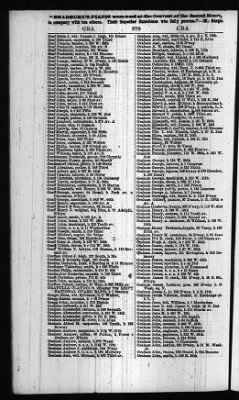
Trow's New York City Directory "For the Year Ending May 1, 1866" gives the address for James Lorimer Graham, jr. as "3 E. 17th." That's the address his friend Bayard Taylor remembered as a "treasury of rare articles" from Graham's impressive  "collections of coins, autographs, drawings, and books" (1876 obituary - New York Tribune). Most likely the March 26, 1866 gathering took place at 3 East Seventeenth street. But as indicated in the transcription below, Graham wrote Duyckinck from "21 Washington Sq," The Washington Square mansion was the residence that James Lorimer Graham, Jr. shared with his uncle, James Lorimer Graham, in 1865 and earlier, according to Trow's and other New York City directories. According to the Tribune obituary by Bayard Taylor,  
"The years 1862 and ’63 he spent in Europe, and then returned to New-York until the close of 1866."  --New York Tribune obituary by Bayard Taylor
On January 18, 1862, Graham wrote Taylor a letter from London, the first of 96 letters from Graham now in the Bayard Taylor papers at Houghton Library, Harvard College Library, Harvard University. On November 29, 1861 Graham wrote to his uncle from Edinburgh, Scotland. In view of Graham's absence from New York in 1862-3 and 1867-76, his note to Evert Duyckinck can reasonably be dated around 1864-1866, probably no later than March 21, 1866--the Wednesday before the party that Melville reportedly attended for "Wanderer's Club" members and invited guests.

Transcription:
21 Washington Sq
Wednesday
Dear Sir 
You will greatly oblige me by giving the bearer the address of Mr Herman Melville, for me.  
I am on my back (and have been for several days) with the diphtheria, or I would have done myself the honor of looking in upon you personally. 
Very truly yours 
Ja[me]s Lorimer Graham Jr.
Related melvilliana posts:
Links to biographical resources:

Thursday, February 11, 2016

We--that is, Melvilliana and the U. S. Consulate General in Florence, Italy--had the wrong man in photo of James Lorimer Graham

Naively I figured the Consulate General of the United States in Florence, Italy would know one of their own. Unfortunately the photo below does not show the former Consul General James Lorimer Graham, Jr. (1835-1876). We should have paid more attention to the caption (no "Jr." at all): "JAMES LORIMER GRAHAM." Not to mention the late look of the photo, not to mention the giveaway in the sub-heading which indicates Graham's Wall Street employer: "S. F. JOHNSON & CO."


This James Lorimer Graham had been with the firm since 1869 but became a partner in 1892, as explained in New York, 1894; Illustrated:
S. F. JOHNSON & CO. Bankers and Brokers, No. 18 Wall Street.— This well-known concern was founded originally in January, 1869, by Johnson & Day, who were succeeded by Gwynne, Johnson & Day. and in 1879, Messrs. S. Fisher Johnson and Charles W. Miller formed a partnership under the present firm title. Both are thoroughly experienced men, and devote their close attention to the wants of their patrons. In 1892 Mr. James Lorimer Graham, who has been connected with the house ever since its inception, was admitted into the firm, with no change of title. They deal in all kinds of bonds, stocks, securities, etc., on commission only, for cash or on margin, and, as they are members of the New York Stock Exchange, all their transactions for patrons are governed by the strict rules controlling that honorable and reliable organization. They also do a general banking business.... --New York, 1894
As reported in Moody's Magazine, in 1905 Graham formed the firm of Graham, Taylor & Co. after the dissolution of S. F. Johnson & Co.

So, we still lack a photograph or any image of James Lorimer Graham (1835-1876), aka "Lorry" Graham or "Lorrie" Graham. According to Bayard Taylor, we're looking for a bald man:
Be to me ever as to-night
And I shall know no setting light
Of love, and joy in all things fair,
And light as thirty, forty wear.
Yea, though as bald my head should grow
As Lorry Graham's,
or white as snow,
Like Stoddard's pow, or tho' my face
Stedman's imposing mien should grace...  --impromptu by Bayard Taylor, quoted in Marie Hansen Taylor, On Two Continents: Memories of Half a Century.
 Related melvilliana posts:

Letter about Melville to Evert Duyckinck is from James Lorimer Graham, Jr. (NOT "Sr.")

The Northwestern-Newberry edition of Herman Melville's Correspondence identifies Graham only as "an autograph collector" and miscalls him JLG "Sr." Looking at the signature on his 1861 passport application, you can see how easy it would be to misread "S" for Graham's "J." 


As reported in the same editorial note in NN Correspondence, somewhere in the Duyckinck family papers at NYPL is a letter dated simply "Wednesday" from James Lorimer Graham, Jr. (not his uncle JLG) to Evert A. Duyckinck, asking for Melville's address:
"You will greatly oblige me by giving the bearer the address of Mr. Herman Melville, for me."  --quoted in NN Correspondence, p766.
Now that we know about one gathering of artists and literati that Melville attended at Graham's place in March 1866, we can confidently place the date before Wednesday, March 21, 1866 (the last Wednesday before the party on Monday evening, March 26, 1866). I'm guessing this must be the "undated" one of two letters in the literary correspondence of Evert A. Duyckinck at NYPL, now filed under "GRAHAM, JAMES G." The other, dated letter from Graham to EAD is from 1861:
b. 7 f. 4 Graham, James G
2 items
1861, undated
Later: Nope, those two items are in fact from James G. Graham. Still looking for the undated letter from JLG Jr. to Evert A. Duyckinck.

Graham's huge collection of autograph material included letters from Melville to publishers Dix and Edwards. For provenance, the Northwestern-Newberry edition of Melville's Correspondence cites
"Clara Louise Dentler, A Privately Owned Collection of Letters, Autographs, and Manuscripts with Many Association Items [Graham Family Collection] (Florence: Spinelli, 1947)." 
Link to WorldCat entry:
Where to go for it? Nearest library to me here on the prairie is literally "1000 miles" away:
Princeton University Library Princeton, NJ 08544 United States
Related melvilliana posts:

Tuesday, February 9, 2016

James Lorimer Graham, Jr.- obit in the New York Tribune by Bayard Taylor

From the New York Tribune, May 2, 1876; image is available online in the Historic American Newspapers at the Library of Congress-Chronicling America. Transcribed below, this unsigned obituary is by Bayard Taylor, as acknowledged in Taylor's letter of condolence to Graham's widow (quoted by Andrew M. Kavalecs in his essay on Graham as "Fosterer of American-German Literary Relations," published in Anglo-German and American Cross-Currents, volume 4).

JAMES LORIMER GRAHAM, JR.

The ocean cable informs us that Mr. James Lorimer Graham, jr., American Consul in Florence, died in that city on Sunday. Mr. Graham was the nephew of Messrs. James Lorimer Graham and John A. Graham of this city, and the brother of Mr. R. M. C. Graham, President of the Metropolitan Insurance Company. He was born in New-York in January 1835, but educated partly at Amiens, in France, where on account of his precocious literary skill he was selected to deliver a poetical address of welcome to Lamartine, when that statesman visited the school in 1848. Mr. Graham afterward lived for a time in Rio Janeiro; then, returning to New York, sailed again in the ill-fated steamer San Francisco, which foundered in a gale off Cape Hatteras. The hardship and exposure he underwent at the time left lasting physical disturbances. In 1856 he married Miss Josephine Garner, the sister of Commodore William T. Garner, and remained for several years in this city, where he soon became widely known through his taste for art and literature, his gentle and generous nature, and his brilliant conversational talent. As a member of the Century Club, the Geographical Society, and other kindred institutions, he acquired a large circle of cordial friends, especially among the artists and authors. The years 1862 and ’63 he spent in Europe, and then returned to New-York until the close of 1866. His collections of coins, autographs, drawings, and books were very interesting and valuable, and his house in East Seventeenth-st. became quite a treasury of rare articles. 
Some time after his return to Europe (we believe in 1869), Mr. Graham was appointed Consul-General of the United States for Italy, and took up his residence in Florence, then the capital. His spacious apartments in the Orsini Palace were always opened, with the most free and bountiful hospitality, to his countrymen, and very few who visited Florence escaped a welcome there. When the capital was transferred to Rome, Mr. Graham remained behind, preferring to accept the simple position of Consul rather than change his Italian home. Although his health has been gradually declining for the past two or three years, the end has come suddenly, and the news of it will be a mournful surprise to his many friends here. His nature was singularly sweet and loveable; he was unselfish almost to a fault; ardent in his attachments, placable, high-minded—in short, a man who was never so happy as in making others happy. No one who knew him can forget him.   --New York Tribune, May 2, 1876
Not all of the biographical facts in this obit are strictly accurate. James Lorimer Graham, Jr. and Josie A. Garner were married November 19, 1855 in New York City, according to The New York Genealogical and Biographical Record cited at Ancestry. I'm still working on the uncertain date of Graham's birth. The March 1866 gathering that Melville attended I thought must have take place at 21 Washington Square North, but Taylor locates Graham's house "in East Seventeenth-st." More work to do, clearly.

Later: Trow's via Fold3 backs up Bayard Taylor on the home address. Trow's New York City Directory "For the Year Ending May 1, 1866" gives the address for James Lorimer Graham, jr. as "3 E. 17th." Most likely the March 26, 1866 gathering happened here, at 3 East Seventeenth Street.

The 1860 United States Federal Census shows James L. Graham [Jr.] living in Newtown, Queens with his wife Josephine and four servants, all from Ireland. Graham's age: 25. Occupation: "Gentleman." His 1861 passport application corroborates the January 1835 date of birth that Bayard Taylor gives in the obituary notice transcribed above. Ink blot makes it hard to read the exact number: 21st? of January 1835. 

About Graham's immediate family, Bayard Taylor has it right: James Lorimer Graham, Jr. is the nephew of James Lorimer Graham. JLG Jr.'s father is Nathan Burr Graham, as the 1869 United States Insurance Gazette nicely confirms. 

Monday, February 8, 2016

Identifying the good fellows with Herman Melville at "Lorry" Graham's, March 1866

The previous post found Herman Melville partying at the Manhattan residence of James Lorimer Graham, Jr. (as the 1865 Trow's NYC Directory indicates, JLG Jr. had moved back to his father uncle JLG Sr.'s place at 21 Washington Square North) on the evening of March 26, 1866. 

UPDATE: But wait, Fold3 and NYPL Digital Collections come through with images from the better source here, Trow's New York City Directory "For the Year Ending May 1, 1866":


A-ha. Now Trow's gives the address for James Lorimer Graham, jr. as "3 E. 17th." That's the address Bayard Taylor remembers in his 1876 obit. Most likely the March 26, 1866 gathering happened here, at 3 East Seventeenth Street.

Fold3: Military Records

Melville would count as one of the "invited guests," I'm guessing, rather than an official member of "The Wanderer's Club." Possibly the newspaper notice should say "Wanderers,'" plural. This Wanderers' Club resembles the "Travellers" who likewise met on Monday nights, as we know from the invitation Bayard Taylor sent to Melville on February 24, 1865. In that 1865 letter Taylor identified two fellow Travellers (Darley and Bierstadt) who also would be named as guests of James Lorimer Graham, Jr. on Monday night, March 26, 1866. Hershel Parker muses about the mutual interests of this bunch in Melville Biography: An Inside Narrative.

By late March 1866, Melville was a confirmed New Yorker, again, as well as a working and (at last!) published poet. Two Civil War poems from his forthcoming volume Battle-Pieces were already out in Harper's (with a third, "Sheridan at Cedar Creek," soon to appear under the title "Philip" in the April 1866 issue), but Melville had not yet written the prose "Supplement." So he could hold his head up among the poets there at "Lorry" Graham's soiree: William Cullen Bryant, Henry T. Tuckerman, Bayard Taylor, and Richard Henry Stoddard. At least two of Melville's fellow guests (Richard Henry Stoddard and "Barry Gray") would soon enough be his co-workers at the New York Custom House. A fine time for socializing, though deep griefs awaited Melville and his family the very next year--his wife Elizabeth contemplated leaving him by May 1867, then in September their eldest son Malcolm killed himself.

The Wanderer's Club. 

The members of the "Wanderer's Club," together with invited guests, were pleasantly entertained last evening at the residence of Mr. James Lorimer Graham, Jr. The gathering was of a social character, and allowed a free and agreeable interchange of thought among the guests. The many rare and curious books, old engravings, valuable autograph letters and articles of vertu, to be found in Mr. Graham's library, were a source of unfailing interest and enjoyment to every one present. Among the guests were Messrs. Bryant, Bancroft, Tuckerman, Herman Melville, Bayard Taylor, Ripley, Duyckinck, Stoddard, Savage, "Barry Gray," W. T. Blodgett, John Van Buren, Leutze, Kensett, Gifford, Bierstadt, Laing, H. P. Gray, Launt Thompson, Darley, Ehninger, Hunt, Key, Baron Osten Sacken, Gilman, and others.  --New York Evening Post, Tuesday, March 27, 1866
Let's go through the list and try to identify the good fellows at Lorrie Graham's party:
  • Savage = probably the Irish-American journalist and poet John Savage (1828-1888). Contributed to the satirical weekly magazine, The Lantern.
  • John Van Buren (1810-1866): Albany lawyer and politico, second son of President Martin Van Buren. JVB must have known Herman's brother Gansevoort in the old days.
In the late 1840s he joined his father in opposing the spread of slavery as a member of the Free Soil Party. John Van Buren, nicknamed "Prince John" by the press, was a highly regarded trial lawyer, famed nationwide for his tall, commanding appearance and his eloquence. He was Chairman of the New York Democratic Party in 1862, and was the party's unsuccessful candidate for state Attorney General in 1865. During the Civil War he continued his opposition to slavery by organizing "Union League" clubs of Democrats and Republicans loyal to the United States. He was known to alternate between periods of overwork followed by periods of dissolution, including excessive drinking and gambling that often left him in financial distress. He died at sea of kidney failure while traveling from Liverpool to New York.  
-- Bill McKern - Find A Grave  

A Storm in the Rocky Mountains, Mt. Rosalie
Albert Bierstadt, Public domain, via Wikimedia Commons
After writers and critics, the Evening Post names many artists in attendance. Shades, intimations perhaps of the departed artists and their dialogue in Melville's poem "At the Hostelry" (text available in John Bryant's edition of Tales Poems and Other Writings, and in the 1963 Russell & Russell issue of Melville's Works, volume 16 at the HathiTrust Digital Library). As mentioned already in the previous post, their radiant patron James Lorimer Graham, Jr. was a lot like Melville's conception of the Marquis de Grandvin.

  • Launt Thompson = Launt Thompson (1833-1894), Irish-American sculptor, protege of Erastus Dow Palmer and close friend of Edwin Booth, 
  • Ehninger = John Whetten Ehninger (1827-1889). Aka John Whetton Ehninger, portrait painter and etcher--1847 graduate of Columbia University, with European training.
Last but not least, a brace of academic diplomatists, or diplomatic academics:
  • Gilman = ?? Only problem is having so many distinguished Gilmans to worry over...how about Daniel Coit Gilman (1831-1908), the Yale librarian, scholar, professor, and future first president of Johns Hopkins University. Gilman's early diplomatic experience "as attaché of the United States legation at St. Petersburg, Russia from 1853 to 1855" (Wikipedia) would seem to intersect somehow with that of Russian general consul in NYC and former secretary to the Russian legation, Baron Osten Sacken--which may be why the two names appear together at the end of the guest-list.
Lots here to absorb and ponder. For one thing, was the writer one of the persons listed in the Evening Post report, or a different, unnamed guest? Parke Godwin?

The University of Virginia Library has a manuscript poem to James Lorimer Graham dated November 16, 1866--the night of the honorary dinner at Delmonico's referenced by Edmund Clarence Stedman in the 1894 Century Club memorial. I'm trying to get a scan or other image of the
"Poetic tribute to Graham by an unidentified writer"
who might be Stoddard or Taylor or Stedman, or another of the select company.


And speaking of good fellows, what happened to that precious manuscript book, listed in the Century Club memorial to James Lorimer Graham, Jr. as
Ye Booke of ye Goode Fellowes
 Does The Century Association still have "Ye Booke of ye Goode Fellowes" in the archives?

Related melvilliana post:

Sunday, February 7, 2016

Melville in March 1866, socializing with The Wanderer's Club at the home of James Lorimer Graham, Jr.

Image Credit: Consulate General of the United States 
Note: this is the Wall Street broker JLG, NOT James Lorimer Graham, Jr. (1835-1876)

Monday evening, March 26, 1866 to be exact, according to the report published the next day in the New York Evening Post. The home address of James Lorimer Graham, Jr. (as listed in the 1867 Trow's New York City Directory) was his father's uncle's mansion at 21 Washington Square North.

UPDATE: Fold3 has the better source here, Trow's New York City Directory "For the Year Ending May 1, 1866." Now Trow's gives the address for James Lorimer Graham, jr. as "3 E. 17th." That's the address Bayard Taylor remembers in his 1876 obit. Most likely the March 26, 1866 gathering happened here, at 3 East Seventeenth Street. Also, James Lorimer Graham, Jr. is the NEPHEW of James Lorimer Graham. Graham, Jr.'s father is Nathan Burr Graham, as explained in the 1869 United States Insurance Gazette and Magazine of Useful Knowledge.

UPDATE #2:
If you thought the photo up top looks too late for the subject of our post, James Lorimer Graham, Jr. (1835-1876), you were right!  Naively I had thought the United States Consulate General would know one of their own in Florence, Italy. Alas, they and we had the wrong man. The sharp looking JLG above is of course the Wall Street broker, partner of S. F. Johnson and Charles W. Miller. 
S. F. JOHNSON & CO.. Bankers and Brokers, No. 18 Wall Street.— This well-known concern was founded originally in January, 1869, by Johnson & Day, who were succeeded by G wynne, Johnson & Day. and in 1879, Messrs. S. Fisher Johnson and Charles W. Miller formed a partnership under the present firm title. Both are thoroughly experienced men, and devote their close attention to the wants of their patrons. In 1892 Mr. James Lorimer Graham, who has been connected with the house ever since its inception, was admitted into the firm, with no change of title. They deal in all kinds of bonds, stocks, securities, etc., on commission only, for cash or on margin, and, as they are members of the New York Stock Exchange, all their transactions for patrons are governed by the strict rules controlling that honorable and reliable organization. They also do a general banking business.... --New York, 1894 Illustrated
So like the U. S. Consulate General in Florence, Italy, we're still in want of any photo of the real James Lorimer Graham, Jr. (1835-1876).

Well! Just the sort of enticements to draw out Melville as we know him in the second volume of Hershel Parker's biography: books, engravings, and heady talk with good fellows like Tuckerman, Duyckinck. and Darley. From the New York Evening Post, Tuesday, March 27, 1866; found in the online Newspaper Archives at Genealogy Bank.

New York Evening Post, Tuesday, March 27, 1866

The Wanderer's Club.

The members of the "Wanderer's Club," together with invited guests, were pleasantly entertained last evening at the residence of Mr. James Lorimer Graham, Jr. The gathering was of a social character, and allowed a free and agreeable interchange of thought among the guests. The many rare and curious books, old engravings, valuable autograph letters and articles of vertu, to be found in Mr. Graham's library, were a source of unfailing interest and enjoyment to every one present. Among the guests were Messrs. Bryant, Bancroft, Tuckerman, Herman Melville, Bayard Taylor, Ripley, Duyckinck, Stoddard, Savage, "Barry Gray," W. T. Blodgett, John Van Buren, Leutze, Kensett, Gifford, Bierstadt, Laing, H. P. Gray, Launt Thompson, Darley, Ehninger, Hunt, Key, Baron Osten Sacken, Gilman, and others.
First order of business will be to identify all concerned, if we can, starting in this post with the host: James Lorimer Graham, Jr. (1835-1876), familiarly known as "Lorrie" Graham. Below are links to the 1894 memorial and the catalog of his library, both published by the Century Association:

The Online Books Page has links to both items in the HathiTrust Digital Library.

Reading things like the passage below from the 1894 memorial, "Lorrie" Graham begins to look like a real-life model for Melville's imaginary Marquis de Grandvin:
One of the most distinguished of his literary friends, who is with us to-night, is reported, at a dinner of literary and kindred spirits not long ago, to have offered the following toast to the memory of Lorrie Graham:

"Here's to Graham! Let us keep his memory green; for when we poor fellows lived on hard tack all the week, we knew that there were always champagne and oysters for us at Graham's whenever we chose to go there."
In another passage from the 1894 memorial, Edmund Clarence Stedman recalled the dinner for Graham at Delmonico's on November 16, 1866 as a "unique and unforgettable" evening. The honorary "Supper" was
given to Lorimer Graham before his departure for Europe. This came off at Delmonico's, Fourteenth Street, on the 16th of November, 1866. From twenty to twenty-five gentlemen were there, nearly all of them Centurions, the Committee in charge being Messrs. William Bond, C. P. Cranch, Bayard Taylor, R. H. Stoddard, Launt Thompson, and the present speaker. In addition to the lyrics in hand, poems were also contributed by Cranch and Boker, but these were not so available for reproduction after the interval of twenty-eight years. Brief speeches in affectionate honor of Mr. Graham were made by the other guests. The evening was in some respects unique, and unforgetable.
The night before, J. Lorimer Graham had served as honorary President of one of the tables at the lavish banquet for Cyrus W. Field. Sponsored by the New York Chamber of Commerce, the Field affair took place in the great hall of the Metropolitan Hotel. The much more intimate dinner for Graham happened at Delmonico's, which provides the setting for At the Hostelry, one of Melville's Burgundy Club poems. Melville, however, is not named as one of the select twenty-five, most of whom belonged to the Century Club.

HathiTrust Digital Library has the 1963 re-issue by Russell & Russell of the 1922-24 Constable edition of Melville's works with The Marquis De Grandvin and Jack Gentian sketches in the thirteenth volume. Admittedly, there's no getting around the fact that Melville's Marquis de Grandvin is a Frenchman,
"a countryman of Lafayette and Frédéric Auguste Bartholdi."  --Herman Melville: A Biography, V2.833
But good lord! look what the American Consulate in Florence, Italy has to say about former U. S, Consul James Lorimer Graham, Jr. :
"During his sojourn abroad he became a proficient French scholar and retained his fluency and perfect accent all his life. As such, he was often mistaken for a Frenchman."  --U.S. Consulate - Florence
Likewise the Appleton's Encylcopedia entry offers a number of suggestive points of comparison with Melville's convivial de Grandvin, in particular his being "widely known through his taste for art and literature and his brilliant conversational talents." (Later note: the entry below is copied nearly verbatim from the obituary by Bayard Taylor in the New York Tribune, May 2, 1876.)

James Lorimer Graham

GRAHAM, James Lorimer, consul, born in New York City in January, 1835; died in Florence, Italy, 30 April, 1876. He was partly educated at Amiens, France, where, on account of his precocious literary talent, he was selected to deliver a poetical address of welcome to Lamartine when the latter visited the school in 1848. Mr. Graham lived for a time in Rio Janeiro, and, after returning to New York, was a passenger in the steamer '" San Francisco," which foundered in a gale off Cape Hatteras. His experience in this wreck injured his health and hastened his death. In 1856 he married and settled in New York, where he became widely known through his taste for art and literature and his brilliant conversational talents. As a member of the Century club, the Geographical society, and kindred institutions, he made the acquaintance of many artists and authors. He spent the years 1862-'3 in Europe, and after remaining in New York until 1866 again went abroad. Meantime he had been busily engaged in acquiring whatever curiosities he had found in his travels, until he had large collections of coins, autographs, drawings, and books. Some time after his return to Europe, Mr. Graham was appointed United States consul-general for Italy, and resided in Florence. When the capital was transferred to Rome, he preferred to accept the office of a simple consul rather than change his home. --Famous Americans - James Lorimer Graham
Graham's diplomatic service in Italy seems transferred in Melville's Burgundy Club material to Major Jack Gentian--a disciple of the Marquis de Grandvin whom Melville imagines as the appointed American consul in Naples.

Andrew M. Kavalecs writes informatively of Graham as "Fosterer of American-German Literary Relations" through his correspondence with Adolf Strodtmann.

A helpful biography by Jeffrey Begeal is available online at The Florin Website. The online biography lists a title by Mr. Begeal that would be lovely to have, if I could only find it:

  • Begeal, Jeffrey. James Lorimer Graham, Jr. c. 1832-1876. Biography of an American Savant. Villa de Bella Silva Press: Smithfield, NC. 2004.

How much of "Lorrie" Graham and the wonderful Wanderer's Club do we find memorialized in Melville's uncompleted writing about the Burgundy Club?

Related melvilliana post: