"One of my great finds was here at the Library of Congress, in Frederick Douglass' Paper. If you really want to do your research properly, you have to go to all the archives, all the libraries you can find, because what they have--libraries have many of the same issues, but not always...." (around 29:00)Brilliant talk by the author of Black Gotham: A Family History, inspiring as ever five years on. University of Maryland Emeritus Professor Carla Peterson is the great granddaughter of distinguished New York pharmacist Philip Augustus White (1823-1891).

Original research and riffs on Herman Melville, authorship, and nineteenth-century American literature.
Wednesday, March 9, 2016
Carla Peterson: Black Gotham: A Family History


Tuesday, March 8, 2016
Melville's Lecture on "Travel"
 |
| detail of the Procession Fresco at Knossos Palace in Crete, Greece Luis Santos via Shutterstock |
Melville delivered this last lecture only three times that we know of, once in New York (Flushing) and twice in Massachusetts (Danvers and Cambridgeport). Long title: "TRAVEL, its Pleasures, Pains and Profit." His talk before the Young Men's Association of Flushing, Long Island took place on Monday, November 7, 1859. The following week, a New York correspondent of the Boston Evening Transcript named Melville along with another visiting lecturer, John R. Thompson of Virginia:
"J. R. Thompson, of the Southern Literary Messenger, and Hermann Melville, have been here on a lecturing visit." --New York correspondence signed "Z" in the Boston Evening Transcript, Tuesday, November 15, 1859.As reported in Frank Leslie's Illustrated Newspaper (Saturday, November 19, 1859), "the brilliant editor" John R. Thompson spoke on "Fools and their Uses" at Clinton Hall, Astor Place on Thursday, November 10, 1859.
 |
| Cambridge Chronicle, February 25, 1860 via Cambridge Public Library |
DOWSE INSTITUTE.
FOURTEENTH LECTURE.—BY HERMAN MELVILLE.Travel.
In the isolated cluster of mountains called Greylock, there lies a deep valley named The Hopper, which is a huge sort of verdant dungeon among the hills. Suppose a person should be born there, and know nothing of what lay beyond, and should after a time ascend the mountain, with what delight would he view the landscape from the summit! The novel objects spread out before him would bewilder and enchant him. Now it is in this very kind of experience that the prime pleasure of travel consists. Every man's home is in a certain sense a 'Hopper,' which however fair and sheltered, shuts him in from the outer world. Books of travel do not satisfy; they only stimulate the desire to see. To be a good traveller, and derive from travel real enjoyment, there are several requisites. One must be young, care-free, and gifted with geniality and imagination, for if without these last he may as well stay at home. Then, if from the North, his first landing should be on a fine day, in a tropical climate, with palm trees, and gaily dressed natives in view, and he will have the full pleasure of novelty. If without the above qualities, and of a somewhat sour nature besides, he might be set down even in Paradise and have no enjoyment, for joy is for the joyous nature. To be a good lounger,—that is essential, for the traveller can derive pleasure and instruction from the long galleries of pictures, the magnificent Squares, the Cathedrals, and other places that require leisurely survey, only through this quality. The pleasure of leaving home, carefree, with no concern but to enjoy, has also as a pendant the pleasure of coming back to the old hearthstone, the home to which however travelled the heart still fondly turns, ignoring the burden of its anxieties and cares.
One must not anticipate unalloyed pleasure. Pleasure, pain and profit are all to be received from travel. As Washington Irving has remarked, the sea-voyage, with its excitements, its discomforts, and its enforced self-discipline, is a good preparation for foreign travel. The minute discomforts, the afflictions of Egypt and Italy, in the shape of fleas, and other insects, we will pass over lightly, though they by no means pass lightly over the traveller. A great grievance from first to last is the passport, and you soon learn by official demands, what becomes to you an adage — Open passport, open purse; and its endless crosses at the close of your travels, remind you of the crosses it has cost you all the way through. The persecutions and extortions of guides, not only the rough and robber like, but those who combine the most finished politeness with the most delicate knavery, are another serious drawback on your pleasure. Though when we think of the thousand times worse extortions practised on the emigrants here, we acknowledge Europe does not hold all the rogues. There is one infallible method of escape from this annoyance: full pockets. Pay the rascals, laugh at them, and escape. Honest and humane men are also to be found, but not in an overwhelming majority.
For the profit of travel: in the first place, you get rid of a few prejudices. The native of Norway who goes to Naples, finds the climate so delicious as almost to counterbalance the miseries of government. The Spanish Matador, who devoutly believes in the proverb, " Cruel as Turk," goes to Turkey, sees that people kind to all animals; sees docile horses, never balky, gentle, obedient, exceedingly intelligent, yet never beaten, and comes home to his bull-fights with a very different impression of his own humanity. The stock-broker goes to Thessalonica and finds Infidels more honest than Christians; the teetotaller finds a country in France where all drink and no one gets drunk; the prejudiced against color finds several hundred millions of people of all shades of color, and all degrees of intellect, rank and social worth, generals, judges, priests and kings, and learns to give up his foolish prejudice.
Travel liberalizes us also in minor points. Our notions of dress become much modified, and comfort is studied far more than formerly. The beard also, of late years, from our travelled experience, is admitted to its rightful degree of favor. In the adornment of our houses, frescoes have taken the place of dead white. God is liberal of color; so should man be.
Travel to a large and generous nature is as a new birth. Its legitimate tendency is to teach profound personal humility, while it enlarges the sphere of comprehensive benevolence till it includes the whole human race.
Among minor benefits is that of seeing for one's self all striking natural or artificial objects, for every individual sees differently according to his idyosyncrasies. One may perhaps acquire the justest of all views, by reading and comparing all writers of travels. Great men do this, and yet yearn to travel. Richter longed to behold the sea. Schiller thought so earnestly of travel, it filled his dreams with sights of other lands. Dr. Johnson had the same longing, with exaggerated ideas of the distinction to be reflected from it. It is important to be something of a linguist to travel to advantage; at least to speak French fluently. In the Levant where all nations congregate, unpretending people speak half a dozen languages, and a person who thought himself well educated at home, is often abashed at his ignorance there.
It is proposed to have steam communication direct between New York and some Mediterranean port. Then the traveller would enter the old world by the main portal, instead of as now, through a side door.
England, France, the Mediterranean,—it is needless to dwell on their attractions. But as travel indicates change and novelty, and change and novelty are often essential to healthy life, let a narrower range not deter us. A trip to Florida will open a large field of pleasant and instructive enjoyment. Go even to Nahant, if you can go no farther— that is travel. To an invalid it is travel, that is, change, to go to other rooms in the house. The sight of novel objects, the acquirement of novel ideas, the breaking up of old prejudices, the enlargement of heart and mind,—are the proper fruit of rightly undertaken travel.Related posts:
Charles Leonard Moore on Melville
The Philadelphia poet and leading Chicago Dial critic Charles Leonard Moore (1854-1925) was into Melville before it was cool:
"Herman Melville’s Moby Dick is the story of a supernatural whale, a veritable demon of the deep, which eludes, fights, and finally destroys its maddened hunter and his ship."
--The Supernatural in Literature, from The Dial Volume 39 (November 1, 1905); reprinted in Incense and Iconoclasm (1915).
Has America produced any such inheritors of the purple line? I think it has. I think the world has instinctively selected two or three of our men for its real regard, while it has only yielded a cold admiration to the New England contingent....
At the right and left hand of Cooper, I should place Brockden Brown and Herman Melville. Brown, a miracle of nature, a Quaker novelist, fascinated Shelley and was evidently deeply studied by Poe. In force of imagination, vividness of weird incident, intensity of picture, unshrinking realism, he is at least the equal of Hawthorne. But human nature is still further withdrawn from the normal in him than in the New England romance writer. If Hawthorne's world is a moonlight one, his is only lit by jagged flashes of lightning. Herman Melville has given us at least two immortal books. Moby Dick is in some sense the greatest sea narrative ever written; but it is so Byronic, so strained and singular in its passion and theme, that only a recurrence of morbid conditions of human nature could bring it into fashion. Typee, however, is sunny and graceful and beautiful and irresponsible, and must always charm. --The Dial Volume 42; reprinted in Incense and Iconoclasm (1915).
 |
| Image via Flying Fish |
Until recently, in America, sex problems have hardly entered into our literature. The one great exception is “The Scarlet Letter,” in which Hawthorne proved himself a mighty tragedian. Puritan as he was, he had an abiding interest in strongly sensuous scenes and characters—as witness Zenobia in “The Blithedale Romance.” Poe, his rival and opposite, though a Cavalier by temperament and a Greek by instinct, was an absolute Puritan in his literary creations…. Herman Melville’s “Typee” is a sunny, irresponsible picture of sex attraction.” --The Passionate Victorians - Dial Vol 60
Moore's 1883 volume Poems Antique and Modern at the Internet Archive:
Sunday, March 6, 2016
Gansevoort Melville's Jackson Jubilee speech in the North Carolina Standard
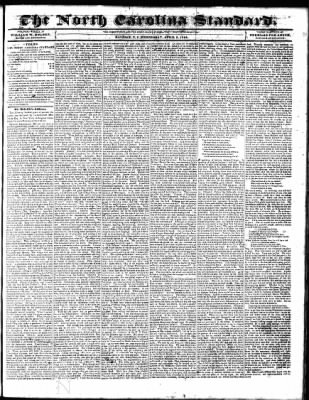
Gansvoort Melville's great speech at the Jackson Jubilee (March 15, 1844) in New York City was front page news in Raleigh. On April 3, 1844 the North Carolina Standard, the Democratic paper edited by William Woods Holden (1818-1892), printed a nice clear and complete text under the heading, "Mr. Melville's Address." Herman Melville's older brother was already known to readers of the Standard. Back on October 11, 1843 Holden's North Carolina Standard had reprinted the report of Gansevoort's speech on Irish Repeal, from the New York Evening Post.
For a transcription of Gansevoort's entire 1844 speech from other, earlier newspaper reports check out the popular melvilliana post
Friday, March 4, 2016
Notice of Pierre in the Baltimore Sun
This item is logged and transcribed in George Monteiro, Herman Melville: Fugitive References (1845-1922), Resources for American Literary Study Volume 33 (2008; AMS Press, 2010) pages 19-93 at 28.
Image Credit: Christie's

“Pierre, or the Ambiguities; by Herman Melville.” A fascinating, original and brilliant production of the same mind which has within a few short years won an equally original and brilliant reputation in an entirely new and untrodden field. “Pierre” works in hearts, and loves, and philosophy: but forgets not diligently to supply his pages with the pungency of his satire. --Baltimore Sun, Wednesday, August 4, 1852; also accessible online in the historical Newspaper Archives at Genealogy Bank.Reprinted in the Lutheran Observer (Baltimore, Maryland) on August 14, 1852.
Texts of Melville's Pierre:
Related post:
- Moby-Dick in Kurtz's Lutheran Observer
https://melvilliana.blogspot.com/2020/02/moby-dick-in-kurtzs-lutheran-observer.html
Wednesday, March 2, 2016
Autograph Letter Signed, Pittsfield, Massachusetts, 29 October 1858.
So Herman Melville and the author of Kaloolah did meet, one time. Melville said so in a letter to Anthony Bowman of Boston, dated October 29, 1858:
"I never had the pleasure of meeting Dr. Mayo but once--now several years ago."
Melville, Herman (1819-1891) Autograph Letter Signed, Pittsfield, Massachusetts, 29 October 1858.: View auction on www.skinnerinc.comWe're short and way too late for this one: sold on May 27, 2015 for $20,910.
Subscribe to:
Posts (Atom)