
 |
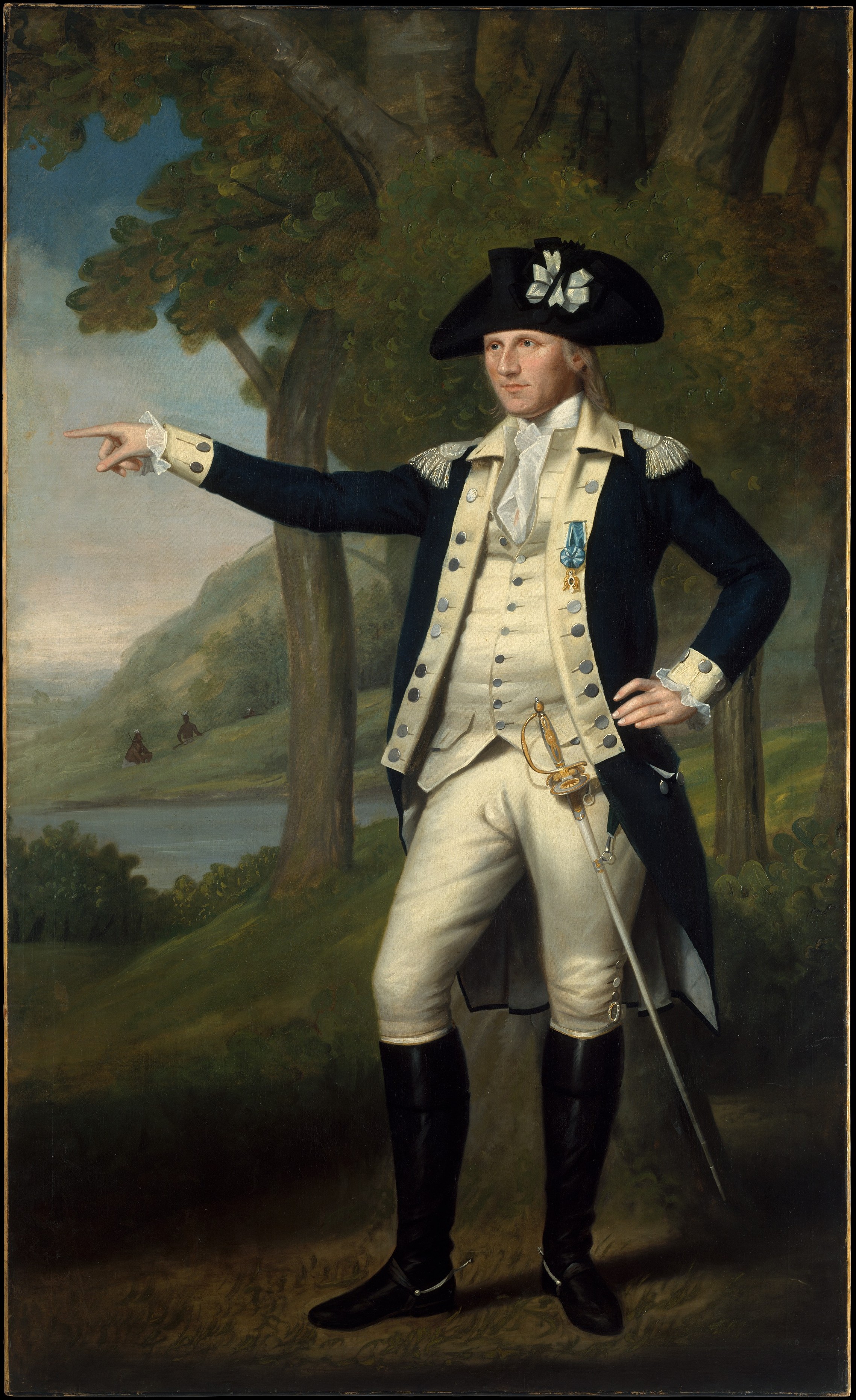
| Marinus Willett via The Met |
The following "Revolutionary Reminiscence" of Washington's Last Expedition tells of a brave officer facing amputation of his severely frostbitten legs. As dramatically related by "M.," the story has two heroes: the suffering warrior and the "humane Indian" who rescued him "from the amputating knife of a surgeon." The sympathetic and resourceful Indian is not named. His grateful patient was Captain Alexander Thompson (1759-1809). Then Lieutenant Thompson marched in February 1783 under Colonel Marinus Willett during the ill-fated Expedition to Oswego. Signed "M.," the "Revolutionary Reminiscence" first appeared in the Army and Navy Chronicle on March 26, 1840. Reprinted elsewhere, often without credit to any source or author, as in the Boston Weekly Magazine for Saturday, April 10, 1840 and Boston Recorder on September 11, 1840. Copied with credit "From the Army and Navy Chronicle" (including the subscribed initial "M.") in the New York Christian Intelligencer on May 16, 1840.

REVOLUTIONARY REMINISCENCE.
In the winter of 1783, the father of the late Lieut. Colonel A. R. THOMPSON, (who fell in Florida at the head of his regiment, 25th Dec., 1837,) then a Lieutenant in the army of the Revolution, accompanied a detachment under Colonel WILLETT, with a view to surprise Fort Oswego, which was at that time in the occupation of the British. The treachery of their Indian guide, however, who led them a circuitous and roundabout way, caused, eventually, a failure in the enterprise, much to the chagrin and vexation of the American party.
The weather was excessively cold, the men and officers but poorly clad; but the soldier's duty oft compels him not only to forego the comforts of home and civilized life, but to endure summer's parching heat, and winter's piercing blast. The state of the country, also, at that period forbade repose or inactivity, while a foot of its soil was in the possession of the enemy. The deception practised by the guide, had protracted their journey, and consequently caused the endurance of much physical suffering, from the length of the route and intensity of the weather. Many of the men had their fingers, toes and ears, badly bitten by the frost. Lieutenant THOMPSON had both of his feet so severely frozen, that when the detachment arrived at the camp, he was in such a state that the surgeon in attendance deemed it necessary, in order to save his life, to amputate both his legs. Sad and heavily fell this decision upon the ears of poor THOMPSON, who, full of military ardor and zeal in his country's cause, was anxious to devote all his energies to assist in emancipating her from the tyranny of despotic power; but here he was in the vigor of youth, having entered the list with the brave and patriotic, to be rendered helpless and maimed for the rest of his life, (if he should survive the operation,) not by an honorable loss of limb in battle, from the ball of a warlike enemy, but from the amputating knife of a surgeon. The thought was painful in the extreme, and he almost wept at the prospect.
"Can nothing be done, Doctor, to save these limbs?" said the youthful officer, as he cast a look of the deepest inquiry at the surgeon, and continued, "they have not yet done half their duty. Cannot you save them, that I may yet serve my country, and participate in the honor of assisting throughout the struggle, and in consummating her entire freedom from the British yoke?"
"I can see no alternative," replied the doctor, as he bound around the ligature above the knee; "it is impossible to save them."
"Then may God give me grace to submit," said the lieutenant, placing his hand over his eyes and pressing his burning brow; and I must be sent home," he continued in soliloquy, "crippled in the service, but not in the field."
He was in this situation, with a few of his military friends around him, whose countenances bore the expression of the sympathy they felt for their beloved associate, and sad too, were his own reflections; but he summoned resolution to undergo the painful operation. At this crisis, a groupe had gathered around the tent, anxious to know the result. Among them was a friendly Indian who, hearing them say a man's legs were to be cut off, he turned, and raising the curtain, passed into the tent. Stepping up, he laid his hand upon the uplifted knife, just in the act of being used: "No!" said he, "that handsome young warrior shall not die! I will cure him!"
The surgeon said it was "impossible! that unless amputation was speedily performed, death from mortification must ensue."
"Halt! doctor," said Thompson, as his eyes turned quickly upon the Indian; "let him try, I would almost as soon die as lose my legs, now when they are so much needed as at the present."
"Let him, let him try," echoed the voices of all present; and the doctor laid down his knife and reluctantly submitted. Come, my good fellow, said they, save these legs, and you shall have a splendid rifle, and be constituted a chief.
The Indian threw off his blanket, commenced by removing the bandages, and by using friction, fomentations, poultices, &c. &c., succeeded in restoring circulation; and finally, after the patient had suffered much pain and anxiety, he recovered the use of his limbs, and was soon able to "report for duty.”The joy and gratitude of the young officer was unbounded; he generously rewarded the humane Indian, and often in after times, when marching in pursuit of the enemy, would he look down at his feet and bless the memory of the red man, who, under God, had been the means of saving his limbs, and perhaps his life. Mr. THOMPSON continued to serve throughout the war, with honor and reputation; and at the close of it was brevetted a Captain for his faithful and gallant conduct.
M.

-- Army and Navy Chronicle, March 26, 1840.
https://hdl.handle.net/2027/hvd.32044097894786?urlappend=%3Bseq=211%3Bownerid=27021597765398891-221
In family correspondence, Captain Thompson himself disclosed the fact of his dangerous frostbite and hopes of recovery--without, however, describing any particulars of his successful treatment:
"We had one hundred and thirty bit with the frost, some very dangerously. I am myself one of the unfortunate number, but by frequent application I have made, my feet are much better and I flatter myself will soon be well."
-- Letter to Brother dated February 24, 1783 as transcribed in "Two Expeditions To Fort Ontario in 1783; Colonel Willett For War; Captain Thompson, For Peace" (Presented by Mr. Anthony Slosek, January 17, 1956) 19th publication of the Oswego County Historical Society, pages 1-16 at 16.
As mentioned early in the "Revolutionary Reminiscence" by "M." Captain Thompson was the father of Lt. Col. Alexander Ramsay Thompson, killed in Battle of Okeechobee during the Second Seminole War in Florida. Captain Alexander Thompson (1759-1809):
"served in the artillery during the Revolutionary war, was retained as captain in the peace establishment, and attached in 1794 to the artillery and engineer corps, and after his discharge in 1802 till his death, 28 Sept., 1809, was military store-keeper at West Point."
More on Capt. Thompson from The Ancestry and Descendants of John Alexander Thompson Nexsen, compiled and arranged by Samuel Emory Rogers (1925) page 16:
Colonel Thompson was the son of Captain Alexander Thompson, (1759‑1809), who enlisted for the American Revolutionary struggle at the age of eighteen in the Artillery Regiment of Colonel John Lamb. He was soon promoted to Captain of Artillery and later served as Captain of Engineers. He drew the plans for the siege of York town, which plans hang under his portrait in the United States Military Academy at West Point. He entered New York with the victorious American troops and was selected by General Washington to bear the dispatches to the frontier forts at Oswego, Niagara, and Detroit, ordering cessation of hostilities. At the close of the Revolution his company was the only company of the American army not disbanded. On October 1, 1787, Captain Alexander Thompson was promoted to First Major in Lieutenant-Colonel Sebastian Baum's Artillery. He resigned his commission as Major on October 9, 1793 in order to accept appointment as Commissary of Ordnance at West Point at the foundation of the Military Academy, which post he held until his death. He is buried at the Military Academy at West Point.


